Monday, March 24, 2014

The Multiple Benefits of Exercise and Why We Need it as Educators.


As educators every school year is comparable to a Marathon. We start out happy and excited for what this year’s race will bring. Together packed in with our fellow educators we rush forward towards our personal and professional goals and aspirations. Then…. just like in a Marathon, we hit the wall and question if we can really finish this race. For educators (and especially those that work in Special Education) that “wall” comes right after Christmas when the 12 weeks of intervention wraps up, IEPs are due, requests for evaluations pile up and parents and teachers start to worry if all their efforts will help that struggling student pass the CRCT. These are the times when we feel like we want to give up and drop out of the race. However, it is at precisely these times of doubt we have to push forward and dig deep. We must take one thing at a time- putting one foot in front of the other until we reach the finish line. How, one may ask, can we do this if we want nothing more than to give up? According to John J. Ratey M.D., the answer may very well be exercise.

In his eye opening book Spark: The Revolutionary New Science of Exercise, John Ratey elegantly lays out the science of exercise and how it can beat stress, lift your mood, fight memory loss, and sharpen your intellect- simply by elevating your heart rate and breaking a sweat.  Exercise, he says, has many of the same neurobiological affects that prescription medication has including boosting levels of serotonin and norepinephrine. These are important neurotransmitters as they are believed to be responsible for regulating our mood and well-being (serotonin, dopamine) and increasing attention and focus (norepinephrine). By exercising we are better equipped to focus on what needs to get done and do it in a positive manner.

Exercise also appears to have a positive result on our ability to recover from stress and bounce back from the biological effects the stress-response has at the cellular level. It stimulates cell recovery, which may have been stripped down from over activation of our “fight or flight response.” This idea is truly groundbreaking as it highlights the neuroplasticity of the brain as well as the ability to activate neurogenesis (brain cell growth). The main player in this neurogenesis appears to be a protein called brain-derived neurotrophic factor, or BDNF, which is known to promote the health of nerve cells. It is responsible for maintenance and preservation of nerve cells. It can be compared to the Department of Transportation (DOT) fixing potholes, paving new roads and building highways in our brain (only much more efficient). What Ratey shows through research study after research study is that chronic stress appears to wear down the cells in our Hippocampus which is responsible for learning and memory. With as little as thirty minutes of exercise levels of BDNF elevate in the brain and study participants do better on cognitive test of memory and learning. Further, BDNF also appear to be responsible for combating the degenerative effects of stress in the Hippocampus that leads to depression and anxiety.
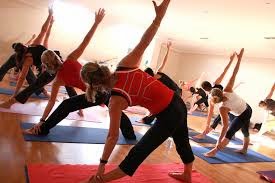


According to Dr. Ratey, adding exercise to your lifestyle “sparks your brain function to improve learning on three levels: First, it optimizes your mind-set to improve alertness, attention, mood, and motivation; Second, it prepares and encourages nerve cells to bind to one another, which is the cellular basis for logging in new information; and Third, it spurs the development of new nerve cells from stem cells in the Hippocampus.”  So next time you feel like you want to drop out of the race due to feeling overwhelmed try to find time to go for a short bike ride, walk or participate in a sports activity. It may give you the energy you need to finish out the school year and complete those last few miles in your professional marathon.

More information can be found at Dr. Ratey’s website, http://sparkinglife.org  where partnerships are being developed to increase the role of physical fitness in schools, hospitals and businesses to increase personal well-being and mental health. 

Friday, September 13, 2013

Mindfulness and Technology: An Unlikely Duo


Mindfulness continues to gain momentum as a practice that can be designed to combat the ever demanding world of technology and media. It is a way for us to "unplug" from the Ipads and emails that vie for our attention like rock star groupies outside of an 80's era Whitesnake concert. Using mindfulness can help us turn off the things that steal our attention and tune into the things that are happening in the present moment such as the way we feel and the sounds we hear. By redirecting out attention to the present moment we are able create space between what is happening and how we respond to it.

In a twist of irony it appears that there are an ever growing list of Applications for our smartphones that make it easier to employ mindfulness in order to unplug from the very smartphones that are helping us to be mindful. Yeah confusing I know... its kind of like trying to start a diet by going to McDonald's and ordering a chicken salad topped with fried nuggets. However, part of dealing with a world that is increasingly being taken over by technology is approaching the way we deal with that technology in a contemplative manner. By mindfully paying attention to how we interact with these technologies we can use them to our advantage and help increase and strengthen a daily mindfulness practice. I have compiled a list of "Mindfulness Apps" that I think can help us maintain our daily practice through fun interactive means.


Insight Timer- Meditation Timer ($2.99): This is my current favorite application for my smartphone. It is available for both Iphones and Android operating systems. With the Insight Timer you can try both guided meditations as well as silent self-guided sits. It has a handy timer that starts and stops your session with a variety of bells and singing bowls. It also has a journal feature to write about your experience after meditating. The app has an online community called Insight Connect that lets you connect with other people using the application.  According to Amazon "With the Insight Connect feature, you can become part of a global meditation community - seeing at a glance people around the world who are meditating with you." 

Conscious App by Makan Studios (free): This is another app that is available for both the Android and Iphone smartphones. This app pushes daily challenges to you that help you stay mindful of a certain goal. It also has a community of users to help you stay motivated. Every morning, everyone gets the same new challenge for the day. If you accept the challenge, you then try your best throughout the day to incorporate it in your experience. In the evening, you mark the challenge as finished and add a daily journal entry to keep track of your progress and share your insights with the others. I think it is a great idea I just am not too thrilled about the idea of more notifications being pushed through my phone.

ReWire by Seated Monkey (free): This free app tries to increase your inherent ability to pay attention. It is simple and easy to use. You listen to sound and when the sound disappears you tap the screen. I also find it to be a great precursor to a meditation session by helping to ready your ability to focus. I  like that you can import your own music or purchase the ReWire "brainwave tracks." Although not specifically meditation this is a great app to use with kids or other novices who may not be experienced with staying aware of their own attention. 

The Mind Gardner App ($.99): This app can be download on both the Android and Itunes platforms. It is based off the popular Mind Gardener website which focuses on positive thinking in the realm of positive psychology rather than mindfulness. It is another app that tries to help with mind training to increase attention and focus. However, it relies more on training your brain for positive thinking and motivation... kind of like a pocket sized Tony Robbins. According to the Android store "Mind Gardener Moments contains 20 topics, including the procrastination buster, the relationship smoother, the mood shifter, the busyness buster, the change embracer and the creativity booster. Each topic reveals 3 simple and practical exercises designed to hit the spot." I don't use this app and by the looks of the website its full of platitudes that can come off a little trite. However give it a shot it may be just what you need. 


Mind Hacker app ($1.92): Mind Hacker uses binaural beat technology to alter your though patterns by stimulating specific parts of the brain using various frequencies. Binaural beats are believed to lower brain frequency, decrease anxiety and increase learning (working memory). Theta waves specifically are supposed to help with meditation. The jury here at the Mindful School Psychologist is still out on this one, but if this is your thing its a great app. 

The Meditation Jar (free):  This app is only for the Iphone and is great for kids to practice "mindful seeing". The Meditation Jar app gives relaxation to your mind and helps you to focus on the simple settling of dots in a jar- similar to a snow globe. Just shake the jar and let the dots clear your mind in 10 seconds right where you are.

As mindfulness continues to "go mainstream" more and more of these apps will continue to be developed. From websites that are dedicated to tracking the growing movement of technology in contemplation/ meditation, as well as podcasts that discuss their utility, the lines between awareness and technology will continue to blur. As a practitioner who is  excited to be apart of the growing mindfulness movement I am optimistic about how these apps can help us to strengthen or daily practice as well as bring mindfulness to those who have not found it. However, I am cautious and always mindful to approach my relationship with this technology in a inquisitive and introspective manner. What apps do you use? Are there any you would recommend. Leave your recommendations in the comments section. 


Sunday, June 2, 2013

What the Internet Does to Our Brains

I found this great video from Epipheo that highlights the importance of devoting a little time each day for cultivating our ability to pay attention to one thing. Wether it is our breath, the sound of birds singing or going for a run, we must triage the never ending sensory stimuli in our ever growing lives in order to learn, grow and think to our best human ability.


Tuesday, April 16, 2013

3 Essential Facts About your Feelings


Here is a great short video I found that focuses on three essential facts about feelings and emotions. It is from the great website Six Seconds , which " is the first and largest organization supporting EQ development globally. Businesses, schools, consultants, and individuals use our scientifically rigorous tools and solutions to create positive change." EQ is short for Emotional Quotient or Emotional Intelligence. The three facts it stresses are:

1. Feelings and emotions are messages

2. All emotions are valuable

3. Emotions are part of our bodies.

I believe that Emotional Intelligence or EQ is something that needs to be taught directly and reinforced throughout our society. It needs to be integrated as part of a comprehensive Social Emotional Learning curriculum in schools (SEL) as well as part of a Positive Culture in Businesses.  Short informational videos such as these help us better understand our emotions and the actions of others.  Through this understanding we can work more efficiently in the work place and help to prevent the cognitive dissonance and alienation that many individuals feel in our increasingly insular society.

Monday, March 11, 2013

Your Mind at Work


Here is a great link and PDF document from Mindful magazine that give some easy ways to use mindfulness when you are dealing with everyday frustrations in the workplace. I like the idea of using little mindful tips to help combat work place frustrations. I know I am someone who often gets easily frustrated. It usually leads to me losing track of my focus as I contemplate the many ways an annoying colleague is making me feel. I especially can relate to the advice about others who gossip, which is one of my biggest pet peeves. Although not a panacea to all problems of the work place, I think these little tricks can be a great way to further a mindful practice if you already have one.


https://docs.google.com/file/d/0B81L8Ptq2gu-S0RDYXZtbTZiSWc/edit?usp=sharing

3 Activities to increase Mindful Awareness


I am trying to get back to updating this blog on a regular basis regarding my work with mindfulness and children. I wanted to write about a few activities that I have been doing that seem to be fun and well received by my kiddos.  I am currently working with 4th grade boys that struggle with attention and focus. Although they are not all diagnosed with ADHD, they have been recommended for my group as children who "struggle with attention and self-control." Recent studies have suggested that  mindful training not only helps children with ADHD increase attention skills, it also helps with developing executive functioning skills. Executive functioning skills are the skills necessary for us to control our behavior as well as  plan and self monitor our actions. Due to this growing area of research (which I recently contributed to and will write about on this blog) I have started to focus more on building mindful awareness with my students. One of the ways we do this is to focus on sensory exploration. Whether its exploring breath, pulse or the sense of touch; focusing on sensory input is one way to build the awareness needed to stay in the current moment. Here are three recent activities I have been doing with my students to build sensory awareness.

Tactile Awareness

Our hands are one of the most sensitive parts of the body. Our fingers have over 100 touch receptors in just their tips. All of this information is rushed to our brain and relays messages within a blink of an eye. However; we are often unaware of the sensations our fingers and hands send to our information processing system and having the sense of sight to go with this information we often take tactile sensation for granted. One way to increase tactile awareness is to play the "What is it?" game. In this game you gather a random assortment of small toys (race cars, action figures ect.), office supplies, coins and anything else that is lying around your office or room and throw then into a sack or tote bag that can not be seen through. Write the names of all the objects on note cards and shuffle the cards. Have a student pick a card and then try to find that item in the bag without looking. They must only use there sense of touch. I like to set a timer or have a song play (students choice :))  for 15 seconds while they search. Before I set the timer I have them describe what the item may feel like. Is it smooth? Rough? Round or Soft? If the student finds the item they get to keep the card. The first student to get to 3 cards wins the game. I got the idea for this game from this amazing educational activity called the the Touch Game, which appears to no longer be in production #sadface. The Speech/ Language therapist at my school had one that I borrowed and the students loved it. It even has a timer built into it. You can buy them on Ebay, but 80-100 dollars seems a lot for a game you can recreate with random objects laying around the office.

Awareness of Breath


Often times when I have students focus on their breath, they start to breath in a loud and labored manner, which is not only unsustainable it also causes a distraction to the group. I began to realize that children may need a fun way to practice sustaining and modifying their breath. The old fashion Floating Ball Game is a great way to facilitate breath awareness. These floating ball games can be purchased for a cheap price on Amazon. I bought one for each of my students. I start by demonstrating how to make the ball go up and down, as well as sustaining it at a certain height. I then show them how to get it to land back in the cradle. After the first demonstration the children are given a couple minutes to practice making the ball go up and down and getting the ball back into to the cradle. We talk about how one must modify their breath to make the ball go up or down as well as focus on the rate they breathe in order for the ball to get back into the cradle. After the students spend some time practicing and focusing on their breath, I then turn the game into a competition. Each person gets two tries to see how long they can keep the ball in the air and get it back into the cradle. The trial only counts if they get the ball back into the cradle. Who ever was able to keep the ball up longest gets a prize (by the way I kept my up for 15 seconds and its not as easy as it looks). After the game we do a 1 minute silent meditation. The students try to focus on their breathing in the same manner they did during the game so they can "practice their breath" for next time.

Pulse Awareness

Our pulse is a great barometer of how our body is feeling in the present moment. Just as a barometer tells us about the future weather patterns our pulse can also tell us how we are about to act or feel in any situation. When there are sudden changes in barometric pressure there may be a storm brewing. When we have sudden changes in our heart rate or pulse, dynamic and unpredictable emotions or behaviors may be coming. However; the great thing about a barometer is that by watching for changes in pressure (or pulse in this case) we are better able to prepare for the coming storm. Listening to the waring signs in our body can lead to improvements in our mental health. Teaching children to listen to their pulse is an easy way for them to gauge how they are feeling. I begin this activity with first teaching students how to find their pulse. There are three different easy ways to find your pulse. The first is by placing you index and middle finger just below your wrist.


If the children have trouble locating their pulse here then they can also try to locate it by placing two fingers just above and to the right of their adam's apple. Finally if this is not working they can lay their hand over their heart, which seemed to work for a couple of my students. Once they find their pulse, I have them count how many heart beats they feel while just sitting. We record each persons heart beat. Next we have 2 minutes of active time. I usually let them pick a song to listen to and we do jumping jacks, run in place and pretty much just run around crazy. For my students who know Yoga, we do 5 sun salutations in row. After two minutes is up we again find the pulse and count how many beats are in 10 seconds. After we record each student's number we then talk about the difference in number of beats as well as how it feels when your heart is beating so quickly. I have them share times when they became nervous or angry and their hearts started beating quickly. Finally we do 1 minute meditation where we focus solely on our breath. After the one minute has ended I ring a mindful bell and the students raise their hand when they can no longer hear the sound. The students then find their pulse again for 10 seconds and notice if focusing on their breath has made their pulse go up or down. We then discuss ways to use breath awareness when we may be faced with times that make our pulse go up.

The great thing about teaching mindfulness to children is the many different activities one can use to help facilitate awareness. Whether it is mindful walking, mindful eating or mindful breathing, teaching children to slow down and be mindful of their actions helps them to cultivate their ability to actively pay attention to the world around them. These three activities alone will not create perfect executive functioning skills or laser sharp attention skills in children. However, my goal  is to help children start to become aware of themselves and aware of their ability to control and regulate behavior. This will help them achieve what ever goals they have for themselves, whether it is passing a math test or getting through a parents' divorce. Hopefully the skills I teach them will turn into future techniques for self regulation. Or as Thich Nhat Hanh puts it, "planting seeds" of effective emotional tools for creating future peaceful, happy lives.

Resources:

Thich Nhat Hanh (2011), Planting Seeds: Practicing Mindfulness with Children, Berkley: Parallax Press

Thursday, December 13, 2012

Infographic about Compassion


Here is a great infographic about teaching compassion with regards to volunteering. I got it from the website InformED, which is a fantastic online community for educators. I think the idea of volunteering and service, as a means for facilitating compassion, is something we need to instill in our younger generations. We also need to connect the idea of compassion as a means of personal and collective growth. I feel like compassion here in the United States is often seen as a weakness. We have to understand that as a culture the ability to have empathy and understanding for others is what builds balance and steadfastness in our lives. Seeing ourselves in others raises our level of consciousness and brings out the best in ourselves. OK I'll get off my soap box now.
 
  I think the picture is a little small so here is the link for the post in which they added it.


Monday, November 12, 2012

School Psychology Awareness Week 2012 #SPAW


The National Association of School Psychologists (NASP) is proud to sponsor School Psychology Awareness Weeek (#SPAW). This year's theme is "Know your own strengths. Discover them. Share them. Celebrate them." This theme highlights the importance of creating supportive learning environments that help students identify, build and employ their strengths in school, at home and throughout life. As a School Psychologist I think this is one of the most important things we can do with our student populations. By exemplifying strengths we build confidence, self-efficacy and long term goals, which in turn create future healthy members of society. I will be tweeting ideas for helping students find their own personal strengths all week.  


One way I like to foster students in recognizing their owns strengths is drawing a comparison to superheros. I currently run a school program which focuses on building mindful awareness through the medium of superheros and super powers. We meet as a group and talk about what each of the students would like to be when they grow up. We then discuss what super powers would be helpful to be successful in that field. For example, a student recently told me that he want sto be a Football player when he grows up. We talked about super speed, super agility and super balance- all of which are things the student feels he is good at and led him to want to be a Football player. Another student indicated that he wants to build robots (I suggested becoming an engineer). We discussed his super powers as being super curiosity, super imagination and super attention. As a group we then meditate on these super powers trying to make sure we stay self-aware of them and keep them at the forefront of our daily intentions. The hope is that the students keep a strength based approach to their goals and aspirations; staying mindful of whether their actions are congruent with their "super powers." This is just one way I am trying to employ this years SPAW theme. For more information on how to spread the "Know your own strengths" theme, the following links may be helpful:

  Activities for School Psychology Awareness Week: Know Your Own Strengths

  Handout for Teachers and other school professionals regarding "Know Your Own Strengths"   

Thursday, November 8, 2012

Video: What Is a 504 Plan? - NCLD

Parents may often find disability services to be a confusing and ambiguous area to navigate. With all the abbreviations and acronyms, it can be difficult to understand what exactly a school maybe telling you. Therefore it is extremely important for parents to educate themselves on what exactly their child is eligible for and why. Here is a great video from the National Center for Learning Disabilities that clearly explains what a 504 plan is.


A 504 plan is not the same as an Individual Education Plan (IEP). They are mandated through two different laws. Again, as a parent it is important to educate yourself on the difference between these two plans and find which is right for your child. The following link, also from the NCLD, highlights and compares the similarities and differences between the two plans: Comparison Chart

Classroom Brain Break!!!

Here is video the Hawn Foundation posted on Facebook showing how quick and easy a Brain Break can be implemented in the classroom setting. I can't say enough about the Mind Up program. Its quick easy and very understandable for both children and teachers.


Tuesday, November 6, 2012

Infographics... The 21st Century King of Graphic Organizers


I'm sitting at a meeting trying to explain to teachers how Suzy's visuo-spatial processing disorder impacts her ability to understand graphs and spatial relations with regards to math reasoning. This is after exemplifying her significant strengths in verbal reasoning and vocabulary development. Her mother is next to me nodding her head in agreement. She contributes "Yes, I have always know she has trouble with directions as well as scanning and sequencing visual information. I wish we could find a way to combine and organize visual and verbal information to help Suzy understand concepts and processes." DING DING DING DING, the bell in my head rings. I immediately say, "well, Infographics have taken over social media as a way to quickly organize and present complex information in a short period of time."..... Crickets.

I go on my computer and immediately get denied by the schools firewall. After a few more attempts I am allowed on a website that has the above example of what an infographic is. I explain to the folks at the meeting that the pre-organized information and color coded nature of the info-graphic may help to lessen the visual processing burden that Suzy has every time she is presented with a page of paper or assignment to read. The reason infographics are so efficient is that they organize and sequence information for us, rather than having to rely on our own executive functions to do it. Its kind of like touring a city. You can try to tour a city yourself, map and guide book in hand, all while trying to read about each landmark and neighborhood. Or, you can get on one of those double-decker tour buses and have a tour guide tell you what to look at and what to think about it. Infographics are the double-decker tour buses of reading comprehension and math reasoning.


Infographics are an extremely effective way of quickly disseminating large amounts of information in a organized and easily digestible manner. The reason this works so well is that they utilize Preattenitve attributes, or visual cues to guide our attention to what is important. These can be size, orientation, color or contrast. By using these "visual cues" infographics are eliminating the need for focused attention and utilizing the brain's natural visual proclivity of observation and processing (Treisman, 1985, Treisman, 1986). Its like we have our own airplane Marshaller that guides our attention to the "information terminal." By eliminating the focused attention necessary to process an unorganized visual field, concepts and ideas are readily available for storage and digestion.

This is especially important for students who have disabilities or learn at a slower rate than their peers. These students spend so much attention and cognitive energy on decoding words, keeping ideas in their working memory and organizing concepts that they often miss the big picture or idea being taught. Infographics can serve to reinforce or remmediate information that gets lost in the cognitive processes of learning. Teachers can use them to teach vocabulary, show hierarchy or stress chronology. It is even helpful for students to create their own infographic as a project to exhibit skill mastery. By relying on preattentive attributes and dealing directly with content, infographics can increase the fluency of comprehension and analyzation necessary for high order skill development . The following links may be helpful for further information regarding infographics and how to incorporate them into a classroom:


http://www.ted.com/talks/david_mccandless_the_beauty_of_data_visualization.html

http://langwitches.org/blog/2010/06/16/infographics-what-why-how/

http://columnfivemedia.com/what-is-an-infographic/

http://www.infovis-wiki.net/index.php/Preattentive_processing

http://www.easel.ly/

http://www.teachhub.com/teacher-infographics

http://visual.ly/


A. Treisman, Preattentive Processing in Vision, Computer Vision, Graphics, and Image Processing, 31(2):156-177, August 1985.

A. Treisman, Features and Objects in Visual Processing, Scientific American, 255(5):114-125, 1986.


Tuesday, October 30, 2012

‘Smartpen’ Pilot Program Helps Students with Disabilities

‘Smartpen’ Pilot Program Helps Students with Disabilities

Great assistive technology that Penn State University is using in order to help student with disabilities take notes. We need to get this technology in our high schools for students with Individual Education Plans (IEP).

Wednesday, October 24, 2012

Interesting Links

As a School Psychologist I think is imperative to stay informed regarding research, current events and the current psycho-educational zeitgeist. I keep a word document on my computer with all the links I didn't get around to reading from the previous day. Yesterday, I started to realize that the document was growing out of control so I took some time out to catch up  on some reading. Here are some interesting tidbits from what I found.


  • A recent study pretty much confirms what most Educators have already suspected: Children's school performance correlates with parent income and education levels. However, what makes this study so interesting is that these correlations are based on differences in volume of key brains regions - like the Hippocampus and Amygdala- which are involved in learning and processing emotions. You can start the obligatory is it the "chicken or the egg?" discussion below. One of my favorite books points out that parent income levels and stress levels often have prenatal consequences before environmental factors can even impact neonatal development. 

  • It looks like a school district in San Diego that offers free Yoga classes to it's students twice a week are under fire from parents who believe this amounts to indoctrination into Hinduism and a violation of "separation of church and state." Along with this being a completely ridiculous argument, I also think it opens a "Pandora's box" with regards to the mindfulness and Yoga movement that has yet to really been ironed out in education, i.e. how comfortable is the "Mindfulness in Education" movement in becoming a secular movement. I have been meaning to write an entire post dedicated to this discourse but keep procrastinating. Stay posted for that. In the mean time here is a post called "Occupy Mindfulness" that got me thinking about the coming storm of traditionalist vs secularists. Then another one stressing that religion is not part of Yoga in schools. #foodforthought 

  • Here is a great interview with Christopher Willard, which deals with some of the themes I mentioned in the previous bullet. If you teach mindfulness or meditation to children in schools, it is a great read and highlights the importance of finding balance between religious philosophy and secular pragmatics. 

  • I found inspiration from this post  as I often struggle with negative thoughts which I label as "realistic." However, what I have come to realize is that focusing on the positive (which in not always reality) creates a better feeling within you, and  also makes one better equipped to deal with the inevitable "sturm and drang" of the human condition. These ten easy steps are great ways to stay positive and "keep it moving." 

  • Here are a bunch of benefits to meditation from the APA. 

  • Here is a nice "Mindfulness 101" post. I remember when I first started practicing Mindfulness I found it to be an abstract concept that was difficult to explain to others. I also had trouble practically labeling something that really ends up being a state of mind. I think the more one reads basic definitions of Mindfulness from others, they not only crystallize their own Mindfulness practice but they also become more fluent and comfortable explaining it to others.... so read away!

  • I love www.edudemic.com. Its a great website that helps educators and schools incorporate technology and social media into their classrooms.  I also love Twitter. Here is a link combining both. As educators we have a responsibility to spread knowledge. We must gain knowledge through growth and study. Creating our own personal learning network is a great way of doing that. This list will help you know who are best to follow when creating a personal learning network on Twitter. P.S. Follow ME!! ;)

Friday, October 19, 2012

5 Ways to Find Balance as a Special Educator


As a School Psychologist I often find myself pulled between different roles. As an advocate for children, a consultant to teachers/schools and a perceived gate keeper for extra services my roles in an educational setting often blur the reality of any given situation. On top of this, schools are microcosms of society; and as such, they often house varying opinions, cultural values and social norms, which impact the dynamic and flow of collaboration. As a stake holder in this system it is imperative to find a balance between the myriad of factors at play. This balance helps to foster meaningful growth and change. This is especially true with regards to children who need extra assistance or are receiving specialized services.  Academic Support Team, Special Education Eligibility and Individualized Education Plan (IEP) meetings are often charged with frustration, misunderstandings and varied intentions, which lead to angry parents and disenchanted teachers. As a  member of these meetings I often focus on different ways to balance the multiple dynamics at play. By merging the cacophony of opinions into a symphony of support, our team is usually able to come to a plan that we all agree on. Although written from the point of view of a School Psychologist, these 5 recommendations will help anyone find balance when heading into a difficult meeting or decision.
 
 
1.) Establish Your Intention-  No matter what your role is on the team (parent, administrator, advocate, teacher), there is a reason that you were asked to participate in this meeting. Before any meeting I ask myself why am I here and what do I intend to bring to this meeting. For the most part my intention in all meetings is to help a child be successful. I typically have some familiarity with teacher concerns and background history before the  meeting. From this information I ask myself "How can I full fill my intention to help this child?" I don't always have the answer; however, this question creates a positive and goal oriented mindset for the meeting. It also creates a nice filter to screen out extraneous information others may add. For example if a teacher starts talking about other students or confronts parents on their parenting style, I can notice whether or not this is consistent with my intention. I can then choose to engage in the conversation or remain silent on the topic. Knowing your intention will help from having to choose sides at a meeting. I usually tell myself, "I am not on the parent's side nor am I on the school's side. I am on the child's side." This typically helps me keep my actions rooted in my original intention.
 
 
2. Practice Non judgement and Compassion- As earlier stated, school meetings often have a variety of opinions and feelings that create a dynamic and tense atmosphere. Each of the these opinions are important in that they inform decision making and utilize the expertise of well trained personnel. However, when there are too many "hens in the hen house"...well, you know the rest. It is important to practice non-judgement to others' opinions and exhibit compassion for their current state. For the most part, all parties want what's best for the child involved; therefore, even if you don't agree with their opinion, you should have compassion from where they are coming from. This compassion can be fostered through the practice of non-judgement. Through my daily mindful practice I have cultivated an ability to notice my thoughts and feelings as they are. Although difficult, as I notice these thoughts and feelings I try to not place a judgement upon them. Good or Bad, Angry or Aloof, Wrong or Right these are all labels we add to our thoughts that cloud how we see a situation and perpetuate unfavorable inner dialogues. By just acknowledging our thoughts as thoughts and not attaching a judgement we are able to clearly process what is happening in the moment and bring ourselves back to the original intention we set at number 1. Another reason I find non-judgement to be so important is that I don't always have all the information or answers in a meeting. Parents, teachers and administrators often bring valuable information to meetings, which help to fulfill our intentions. If we immediately judge or label what someone else is communicating we can't internalize the personal knowledge and expertise that they are bringing with it.
 
 
3.) Practice Perspective Taking- I have found that trying to take the perspective of another to be one of the most helpful things I can do when collaborating with a team. Putting yourself in the shoes of someone else helps you understand where they are coming from and makes practicing non-judgement that much easier. Before a meeting think about who is going to be there and what their role is. Think about what their intention may be. Think about how they feel about the issue at hand. Try to imagine what they may feel when they come to the meeting. For example I often try to think about how a parent would feel when they walk into a meeting with 3 or 4 school officials around a table with laptops open. Would they be anxious, scared, or paranoid that they were being talked about. Think about how they feel when they sit down on the other side of the table with all school personnel facing them. I try to choose my seat at the table to balance out the dynamics. If all the school personnel are on one side I try to sit on the side with the parent. This may help to prevent the illusion that the meeting may be one sided. I also take the perspective of the teacher, which is not always clear. Are they frustrated with the student ? the school? themselves? It is important to take perspectives and feel empathy; however, one must not create preconceived notions. Practice non-judgment when perspective taking. If during the meeting you realize that your perspective of the participant was inaccurate, be open to creating a new perspective. Put yourself in their shoes regarding what they are saying right now in the present moment.  
 
4.) Ground Yourself when Necessary- School Meetings can be emotional and stressful. At times people become angry, frustrated, or overwhelmed by what is being presented. Meetings can also be cathartic, creating a new found respect and camaraderie for team members and the agreed upon plan. It is imperative that participants stay mindful and aware of the feelings they are having and ground themselves in the moment they are experiencing. Recognizing emotions and grounding yourself when necessary creates balance and helps to build space between thoughts and feelings. This space will help you when practicing non-judgement as well as aligning with your primary intention at the beginning of the meeting. If you feel overwhelmed, begin focusing on your breath. Focusing on your breath has been shown to help with stress management. Feel the air come through your nasal passage on the in breath and the rising of your diaphragm. Feel your stomach go down as you exhale. Notice any shortness of breath or elevated heart rate. Don't label these things as negative, just notice how they feel. You can even chose an anchor word to bring you back to your sensory experience and away from negative thoughts that may be occurring due to your elevated emotional state. If you are angry or frustrated just label the feeling as that... a "feeling". Breathe in and breathe out and repeat the word "feeling" in your head as you do this. When I feel this way I am able to bring myself back into the moment after about ten breaths.
 
 
5.) Check in- with your intention during and after the meeting- As any meeting or discussion progresses topics change, people go on tangents and new ideas are thrown around. It is important to check in with yourself and observe if you are still acting or speaking from your original intention. One way of doing this is to set the timer on your phone for 10 minutes. As it vibrates in your pocket notice where the topic of the meeting is and how you have contributed to taking it there. Is this consistent with your original intention? What do you need to change in order to get back to your original intention. Notice how you feel about this. It is also important to check in with yourself after the meeting. Did you meet your intention? Did you achieve what you set out to do at the beginning of the meeting? If not what things could you do different next time? After the meeting is over, leave it in the past and focus on what is next. What are the next steps that YOU need to do to continue with your original intention.
 
Not all meetings go as planned and there are often situations that are not solved or wrapped up by the time the meeting closes. Nonetheless by following these steps and creating balance you are better preparing yourself for the collaboration and open mind necessary for future discussions. Whether it agreeing on IEP goals, negotiating a house closing, or working on a marketing campaign, creating balance is important for us to achieve our goals as well as work together smoothly as a team. As Special Educators we have to share our ideas opinions and expertise together as a team. By creating a balanced and focused team we are ultimately creating better service delivery for the child at hand. 

Thursday, October 18, 2012

Great Video Highlighting Johns Hopkins Research

Here is a great video showing the research that is being completed at Johns Hopkins University with regards to Mindful Meditation and Yoga in schools. The more research that is done, the more schools will begin to accept the possibility of a Mindful curriculum as a viable and sustainable Social Emotional Learning (SEL) intervention.


Visit NBCNews.com for breaking news, world news, and news about the economy

Monday, October 1, 2012

5 Ways for Teachers to increase Mindful Awareness in the Classroom

As Mindfulness in schools goes mainstream, new and practical ways of classroom integration continue to be explored and enjoyed by teachers. Increasing mindful awareness in classrooms can help reduce teacher and student stress, increase attention and focus and foster social emotional competence. Although not a full mindfulness program, teachers can implement these quick and easy mindful based activities into their daily routine in order to help foster the awareness that comes from a full mindfulness practice. The following 5 activities can be implemented throughout the day in order to help students transfer between activities, de-stress after a test, and refocus after an exciting project or experiment. Although created for elementary age students, these ideas could easily be revised for high school or college age students as well.


1. Mindful Minutes- Mindful Breathing is the foundation of any Mindful practice and should be the first thing that is taught to children. This technique is best taught by teaching children to focus on a sound, then slowly transfer their attention to their own breathing. A mindfulness bell is a great way of transitioning between a sound and  breathing. By focusing on breathing children "anchor" themselves in the moment and focus inward. If you cannot find a mindfulness bell, a chime, triangle or singing bowl can also work. Once the sound goes away have the students focus on their breath for 1 "Mindful Minute". These Mindful Minutes can be included at any time of the day between any activity. It's especially good to start the day with a Mindful Minute or have one after coming back from lunch or recess. As children get better at focusing for the full minute you can increase the time to 2 minutes or 5 minutes.

2. Cool Down with Yoga- A simple series of Yoga poses are a great way to get children moving within a classroom and ground themselves in the moment. For teachers that are unfamiliar with Yoga there are a few classroom based Yoga programs that give more detail about how to infuse Yoga into a school setting such as Go Grounded Yoga, Yoga 4 Classrooms, and Yoga in My School. Learning a simple Sun Salutation and guiding your class through it, is a quick and easy way to get them moving and mindful of their bodies. Have your students focus on where their bodies are in space as well as how they feel after 1-2 rounds. Also encourage them to focus their attention on their breath, coordinating in and out breaths with each pose in the series. If there is not enough room to do sun salutations focus on some standing poses such as Tree, Mountain or Warrior. Here is the Grounded Flow Clock from the Go Grounded program which is a great visual to help student learn the classic sun salutation. A Yoga break is a great way to transition between activities and get kids blood flowing between long periods of sitting.

3. Mindful Seeing- This a great activity to build children's awareness and ability to sustain focused-attention. It helps children recognize the difference between just looking/labeling something vs. acknowledging/being aware of the personal experience of seeing something in its individuality. Mindful seeing can be accomplished with any object. I like using lemons. Grab about 6 different lemons and have your classroom break into 6 different groups. Assign each group a lemon and have them all look at the lemon very closely. Have them touch it, look for special bumps, notice the size and any individual characteristics. After five minutes collect all the lemons and put them in a basket. Shake the basket then pull out one lemon at a time and have each group try to decide if that is their lemon. This activity helps the children understand the multi-sensory aspects of memory as well as how we engage all of our senses during active observation.

4. Mindful Listening- As music lover I really enjoy this activity and often practice this on my own when I am listening to music or taking a walk. You can pick a children's song (there are a variety of children's songs out there) or a current song from the radio. Try to have the students actively listen to each instrument and melody in the song. It may be helpful to pause the music and hum the bass line, or the melody and then play the song again. Try to have the students focus on one particular part of the song and only that part of the song. For example the guitar may be playing a melody. Teach the students to recognize the guitar and focus on the guitar only. After a couple of minutes switch to another instrument. This is great activity to try during music class. Another listening activity that I enjoy is having students close their eyes and listen to the quiet room for thirty second. After thirty seconds have them list all the sounds that they came up with on the board. Try the same activity again and this time listen quietly in the room for a full minute. See if the class is able to  notice more sounds than before. This is a great activity to anchor students in the moment and practice focused attention and concentration.

5. Wishing Good Will-  Good will wishes are a great way to develop gratitude in your classroom as well as a positive classroom environment. Research has shown favorable results from positive affirmations as well as acknowledging gratitude. Positive Psychology is a growing field that touts neuroscience as support for the positive effects of optimism and other positive thoughts within a classroom setting. One activity to facilitate positivity and interconnectedness in the classroom is developing good will wishes. This can be completed by having students take a mindful minute (as stated above) and think about someone granting them one good will wish that can help someone else. They can send the wish to themselves silently saying "I wish that .....". Have them repeat the wish to themselves silently. Encourage them to notice how they feel when they say the wish. Next, after a minute or two, they can focus on a friend in the class or a family member. Send that person the wish and silently say " I wish that (person of choice)......" Again, encourage them to recognize how they feel when they wish good will to others. After about five minutes have them focus back on their breathing and slowly switch attention back to the classroom. These well wishes can be referred to throughout the day if disagreements arise. It is also a great way to start of the day or week.

By incorporating these ideas into their classrooms, teachers can begin to build mindful awareness and social emotional competence with their students. Although not a full curriculum, these activities can help to foster stress reduction and awareness. They can also help with transitions between activities and create a classroom culture that is ripe for learning. For more information regarding mindfulness in schools, refer to the following links:


Friday, September 28, 2012

To all my ADHD friends .....

                       The story of my life .............................................................

Monday, September 24, 2012

Infographic for Special Education

I guess it is Special Education month, although I had trouble finding any organization or proof that "National Special Education Month" exists. What I did find was this great infographic that takes a really nice look at special education and its numbers over the years.  If anyone knows why September is Special Education Month, let me know.

Special Education 101 Infographic


SOURCE

Friday, September 21, 2012

Afternoon links

  • Great article in New York times   suggest that When children learn to play a musical instrument, they strengthen a range of auditory skills... these skills persist years after lessons stop.

  • That article led me to this place at Northwestern University that has a lot interesting research and such.


  • US Department of Education Office of Civil Rights (OCR) upholds seculsion rooms in a Norh Carolina school district. LINK .... I guess they are not against the law... but they are unethical and not used properly in the majority of cases (IMO).